Energy Resilience in a Volatile Europe: How EMAS Energy Is Positioning Romania as a Strategic Infrastructure Hub
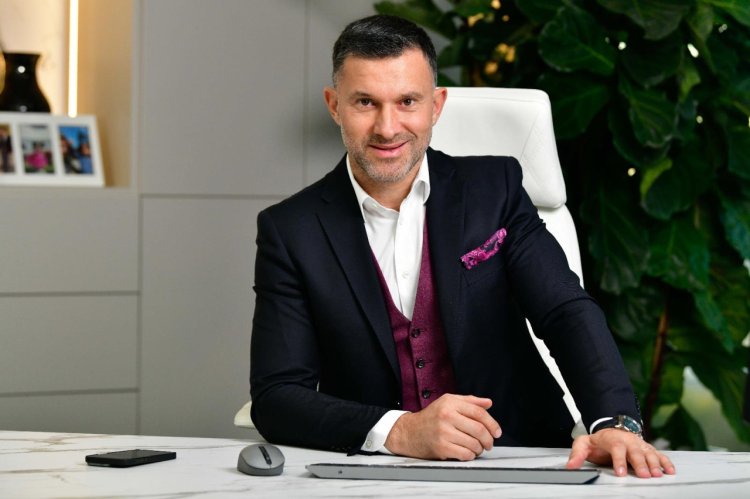
An interview with Petru LUHAN, CEO of EMAS Group & EMAS Energy
Q1: Europe is going through a complex energy transition, shaped by geopolitical instability, increasing demand, and pressure for decarbonization.
In this context, EMAS is launching the Energy Resilience program. What does this initiative represent?
Petru LUHAN: Energy Resilience is not just a concept, it’s a structural necessity. Europe has moved beyond the phase of simply adding renewable capacity. The real challenge today is stability, predictability, and the ability to manage energy intelligently.
Through this program, EMAS Energy focuses on developing integrated infrastructure that combines renewable energy production with storage capabilities. The objective is to create systems that are not only sustainable, but also resilient under pressure, whether that pressure comes from market volatility, grid instability, or geopolitical factors.
Q2; You recently returned from the Battery Business & Development Forum in Frankfurt, this APRIL 2026.
What were the key takeaways from that event?
Petru LUHAN: Frankfurt confirmed something we’ve been seeing for a while: battery storage has moved from being a “nice to have” to a central pillar of the energy ecosystem.
The discussions were highly pragmatic. Investors and developers are no longer asking if storage is needed, but how quickly projects can become bankable and scalable. There was a strong focus on monetization mechanisms, grid services, and long-term infrastructure integration.
What stood out is that the market is maturing fast, and only those who can deliver integrated solutions will remain relevant.
Q3: How does EMAS position itself within this rapidly evolving landscape?
Petru LUHAN: We are positioning EMAS as an integrated energy infrastructure platform, not just a project developer.
Our portfolio reflects this direction. We currently have over 1.200 MW in photovoltaic projects both completed and under development, complemented by significant battery storage capacity, over 2.600 MWh, both integrated within solar developments and as standalone systems.
Projects such as Saligny, Corbu, and Medgidia, Laza, i include large-scale storage components, while standalone BESS projects in locations like Drăgănești and Medgidia strengthen our ability to support grid stability and energy balancing.
This dual approach allows us to respond to multiple revenue streams, from energy arbitrage to ancillary services, which is exactly what investors are looking for today.
Q4: Romania is increasingly mentioned as a strategic energy market. What makes it attractive right now?
Petru LUHAN: Romania is in a unique position. It has strong natural resources, competitive development costs, and increasing regulatory alignment with European energy policies.
More importantly, it is still an emerging market, which means there is room for growth and significant returns. We’re seeing growing interest from international investors who understand that entering at this stage allows them to capture long-term value.
The challenge, however, is execution. This is where companies like EMAS come in, by structuring projects that are not only technically sound, but also financially viable and offer “One-Stop-Shop”-Concept to the relevant beneficiaries, which means: Project development (engineering and design), EPC (Construction of the facilities), Obtaining NON-REIMBURSABLE EU-FUNDS, Connecting the facilities to the GRIDs, etc. EMAS-Energy = Full Service
Q5: What role does the Energy Resilience program play in attracting international capital?
Petru LUHAN: It creates a clear framework. Investors don’t just want projects, they want visibility, predictability, and scalability.
Energy Resilience allows us to package our developments in a way that aligns with institutional expectations. It connects infrastructure development with financial structuring, as one of our branches is specialised in EU funds, which is essential for attracting serious capital.
In a way, we are translating the complexity of the energy market into investment-ready opportunities.
Q6: Looking ahead, what is the long-term vision for EMAS?
Petru LUHAN: Our vision is to become a reference platform for energy infrastructure in Europe.
That means going beyond individual projects and building an ecosystem that integrates renewable production, storage, and future-ready technologies. We are also looking at how these systems can support new industries, including data centers and hydrogen infrastructure.
The future of energy is not just about producing more. It’s about managing it smarter, and building systems that can adapt. That’s where we see EMAS playing a key role.
Conclusion
As Europe accelerates its transition toward a more resilient energy system, companies capable of integrating production, storage, and financial structuring will define the next phase of the market.
Through its Energy Resilience program and active participation in key industry forums such as Frankfurt’s Battery Business & Development Forum, EMAS is positioning itself not just as a developer, but as a strategic infrastructure player in one of Europe’s most promising energy markets.
EMAS Energy is part of EMAS Group, an integrated platform focused on the development of renewable energy and storage infrastructure across Europe.
The company is led by Petru LUHAN, former Member of the European Parliament, with over two decades of experience in European policy, funding mechanisms, and cross-border strategic development.
His background at the European level, combined with hands-on involvement in large-scale energy projects, positions EMAS at the intersection between policy, infrastructure, and investment.
Vrei ca informatia ta sa ajunga la publicul pe care il tintesti? Publica un comunicat de presa →
Platforma Comunicate Wall-Street.ro poate permite doar introducerea unor link-uri NoFollow. Pentru publicarea unui comunicat cu link DoFollow vă rugăm să trimiteți solicitarea către [email protected]. Mulțumim!